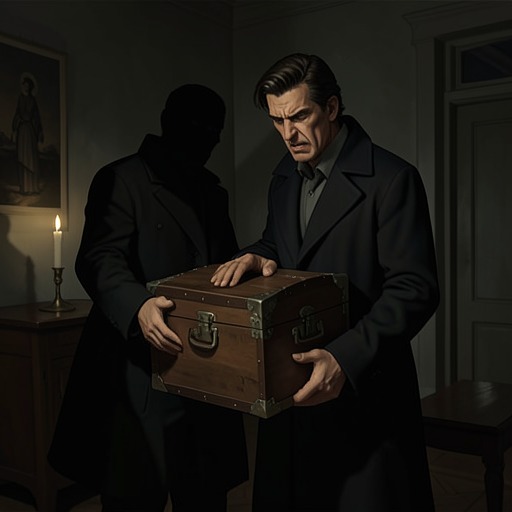
Maure Hellcorporated
Vainqueur the DragonMaure Hellcorporated is the infernal corporation that gives commercial form to demonic expansion. Under Archdevil Isabelle Maure, Mistress of Blades and Chief Demonic Executive, it combines family power, military force, territorial ambition, and market competition. Its conflict with Victor Dalton and the opening of Nethermart transforms a dispute over magical goods and monster resources into a struggle over who may control commerce in Outremonde.
Nature and Leadership
Maure Hellcorporated is presented as a large, organized demonic enterprise rather than a loose gathering of fiends. Isabelle Maure identifies herself as its Chief Demonic Executive and Mistress of Blades, a title that joins corporate administration to direct violence. Her authority extends over soldiers, portals, infernal power, and commercial territory, allowing the organization to treat armed intervention as another instrument of business policy.
Isabelle’s personal history also reveals the corporation’s expansionist logic. She explains that she gave birth to Brandon Maure in order to create an agent on Outremonde and expand into the overplane. Brandon’s father was used for the purpose of perpetuating his infertile elven bloodline, then drained of life during conception; Isabelle describes the arrangement as mutually advantageous even though it ended in his death. Brandon therefore represents not only a family connection but also a corporate extension of Isabelle’s imperial strategy. Her concern that he has failed to conquer Gardemagne shows that territorial conquest and family expectation are inseparable from the company’s ambitions.
Commercial Model and Resources
The organization operates through control of markets as much as through physical power. Victor Dalton’s efforts begin when Vainqueur Knightsbane orders him to turn discarded monster parts, corpses, and other waste into a source of money. That directive leads toward a commercial system in which materials gathered by monsters can be processed and sold instead of simply being left for animals. The resulting competition places Maure Hellcorporated against a new enterprise built around the resources and labor of Murmurin.
The corporation’s reach includes infernal portals and armies. When Victor encounters Isabelle, he learns that Furibon’s failed attempt to open a Hellgate had affected Maure Hellcorporated’s plans: Isabelle says she had an army of thirty thousand fiends waiting behind the portal. The precise scale of that force makes the gate more than a local magical incident. It was a logistical route for invasion and a channel through which the corporation could bring military capacity into Outremonde.
Conflict with Victor Dalton and Nethermart
The rivalry becomes explicit when Infercorp intervenes on Victor Dalton’s behalf. Infercorp’s representatives claim that Victor is a true mortal partner operating on Outremonde and is protected by the company’s Faustian Associate Protection Program and non-competition clause. Their paperwork establishes Victor as a protected commercial client, preventing Isabelle from treating him as an unprotected individual. The legal defense is deliberately absurd and effective: corporate procedure becomes a shield against demonic violence.
Isabelle reacts by asserting that Murmurin belongs within her company’s market. Her objection shows that Maure Hellcorporated regards commercial territory as proprietary even when its ownership is contested. The dispute is not merely over a shop or a product line; it concerns whether Victor’s organization may establish an independent economic base in a region the corporation considers part of its market.
The opening of Nethermart makes that challenge public. Built by bug fiends under Malfaisant’s direction, the six-floor, ivory-draped building becomes the tallest structure in Murmurin next to Emperor Vainqueur’s statue. Its grand opening announces the first fiendish magic-item shop in Outremonde, open to monsters and mortals, with souls accepted as collateral when customers cannot pay in coins. A thirty-percent discount on weapons is offered for the coming war with Maure. Nethermart thus answers Maure Hellcorporated on every level: it sells comparable goods, recruits a broader customer base, uses debt as an instrument of expansion, and openly prepares the population for armed conflict.
Invasion and Market War
Maure Hellcorporated eventually responds with force. The seals guarding the vault are broken, and dozens of imps, fiends, and bug-like monsters enter in ordered formation, carrying weapons and wearing armor. Their commander declares that Vainqueur’s illegal occupation of King Maure’s property has ended and that Maure Hellcorporated has come to reclaim its market share. The language of repossession turns invasion into a corporate action: soldiers are not described as conquerors alone, but as agents recovering commercial territory.
Victor recognizes that the sabotage likely came from inside Murmurin, meaning that Maure Hellcorporated has agents within the city and that the breach may be the opening salvo of a full invasion. This realization changes the meaning of the attack. The corporation is not simply retaliating against Nethermart’s success; it has prepared infiltration, portal access, and an armed campaign. Vainqueur interprets the assault as an attack on his celebration, while Victor understands it as a coordinated strategic escalation.
The organization’s economic identity remains visible even during the battle. Its soldiers invade the treasure vault to reclaim market share, while Vainqueur immediately reinterprets them as food for his followers. The clash therefore produces a comic inversion: Maure Hellcorporated arrives with the logic of a disciplined corporation and army, but inside Vainqueur’s domain its personnel are reduced to potential appetizers. The joke does not erase the danger; it exposes how completely both sides translate every resource, body, and territory into something consumable.
Rivalry, Monopoly, and Significance
The later confrontation with Infercorp makes the rivalry an open contest over monopoly. Malfaisant describes Infercorp as having taken the market from Maure Hellcorporated and insists that it is now Infercorp’s turn to establish a monopoly. When Miel announces Heaven’s intention to prospect for new believers in the same market, the competition widens again. Infercorp claims that its market was won from Maure Hellcorporated, while Heaven presents religious expansion as investment in a free market.
Malfaisant orders his company to inform its shareholders and cut prices, using the same aggressive logic by which Emperor Vainqueur cuts down enemies. The response confirms that Maure Hellcorporated has helped create a market in which military pressure, price competition, soul-based contracts, and religious conversion are treated as interchangeable strategies. Miel’s description of Ishfania as a land with no taxes, no regulations, and total freedom of religion frames the region as a haven for competing providers, but her own prospecting reveals that Heaven is entering the same struggle for customers and influence.
Maure Hellcorporated’s significance lies in this fusion. It is simultaneously a family enterprise, a demonic state apparatus, an invasion force, and a monopolistic business. Its defeat or displacement opens space for Nethermart, Infercorp, and Heaven rather than ending competition altogether. By making market share the language of invasion and treating souls as collateral, the organization embodies the book’s recurring satire: even the supernatural realms reproduce corporate rivalry, contractual protection, shareholder pressure, and aggressive expansion, while the apparent freedom of the market conceals a continuing contest for control.